Kanniyakumari
Thirunandikkara Cave Temple
Photo: Delight S · CC BY-SA 3.0
Palace Country · Monument

Thirunandikkara Cave Temple

திருநந்திக்கரை குடைவரைக் கோவில்

A rock-cut cave with faded mural paintings

Move across the photo, or drag it on a phone, to look around.

You arrive

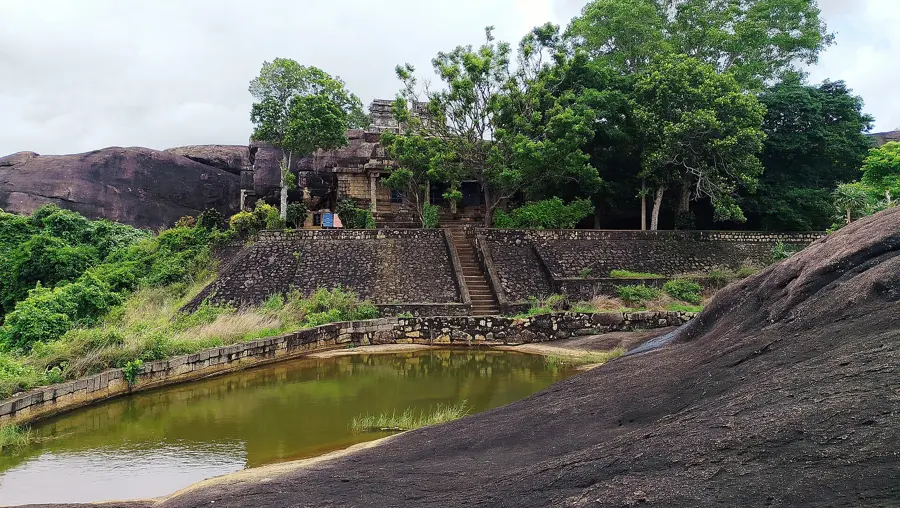
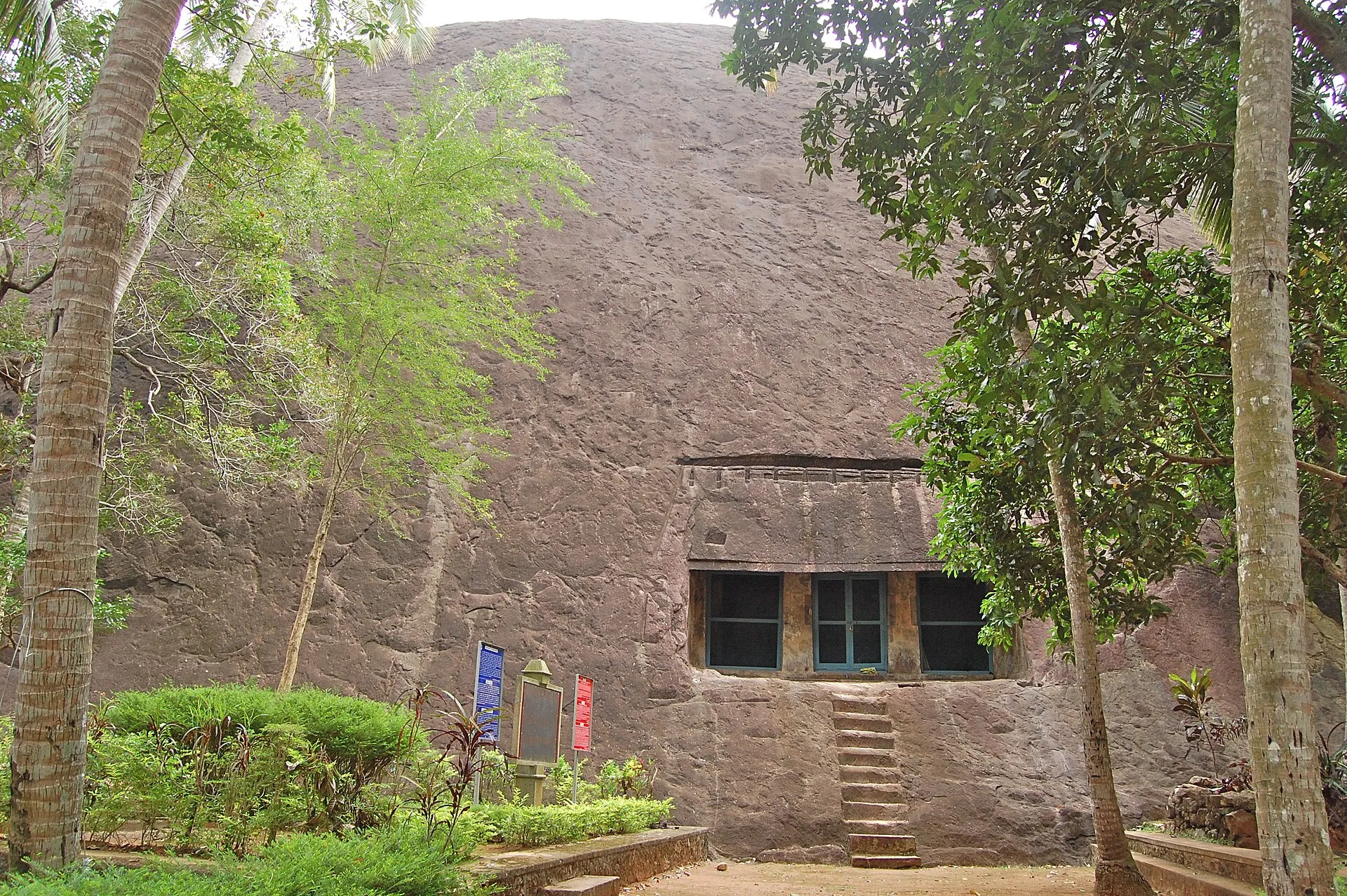
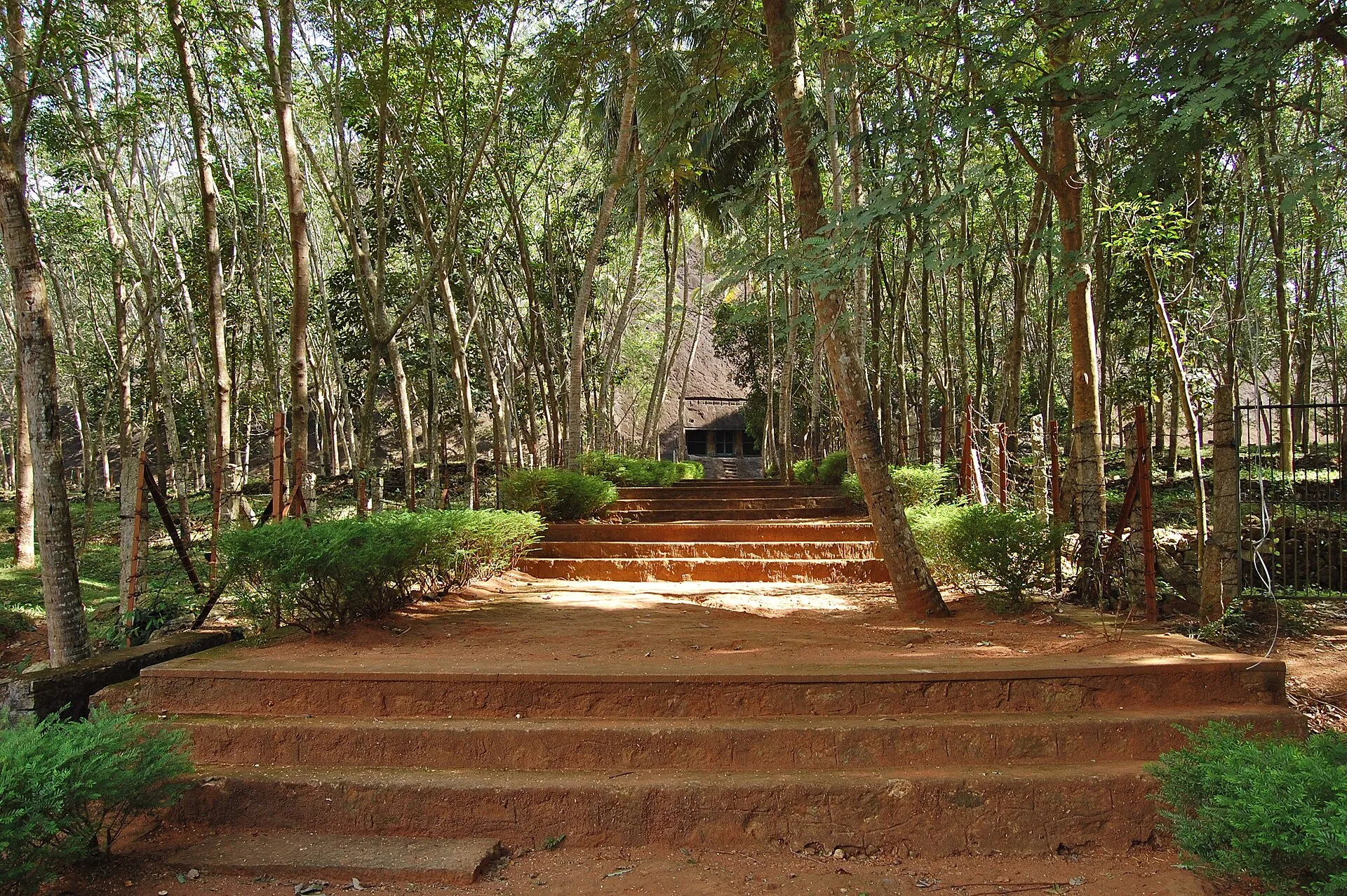
You arrive in the village of Thirunandikkara and find a shrine cut into solid rock. There is no tower to announce it. This is a protected monument, managed by the Archaeological Survey of India from its Thrissur circle, and it keeps a low profile. You walk toward the rock face and the opening in it, and the bright day stops at the threshold. Inside is a small and shadowed space with very old colours on the wall.

Thirunandikkara Cave Temple
Thirunandikkara Cave Temple · Photo: Delight S · CC BY-SA 3.0
01 / 02

Into the cave

You step into the excavated hall. Everything here was removed rather than built: the room is what remained when the rock was cut away. Touch nothing, but notice how the air is cooler and how the chisel has shaped the ceiling and pillars. The shrine is dedicated to Shiva today, but the history of this rock has more than one chapter.

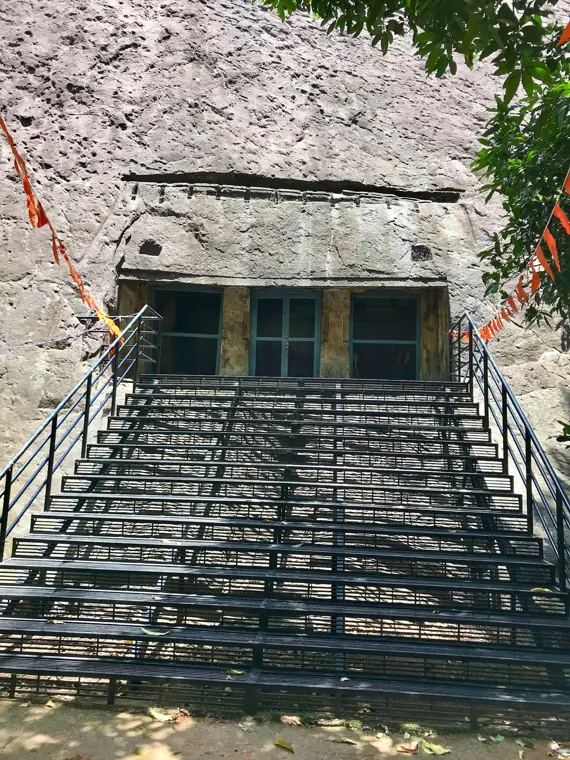
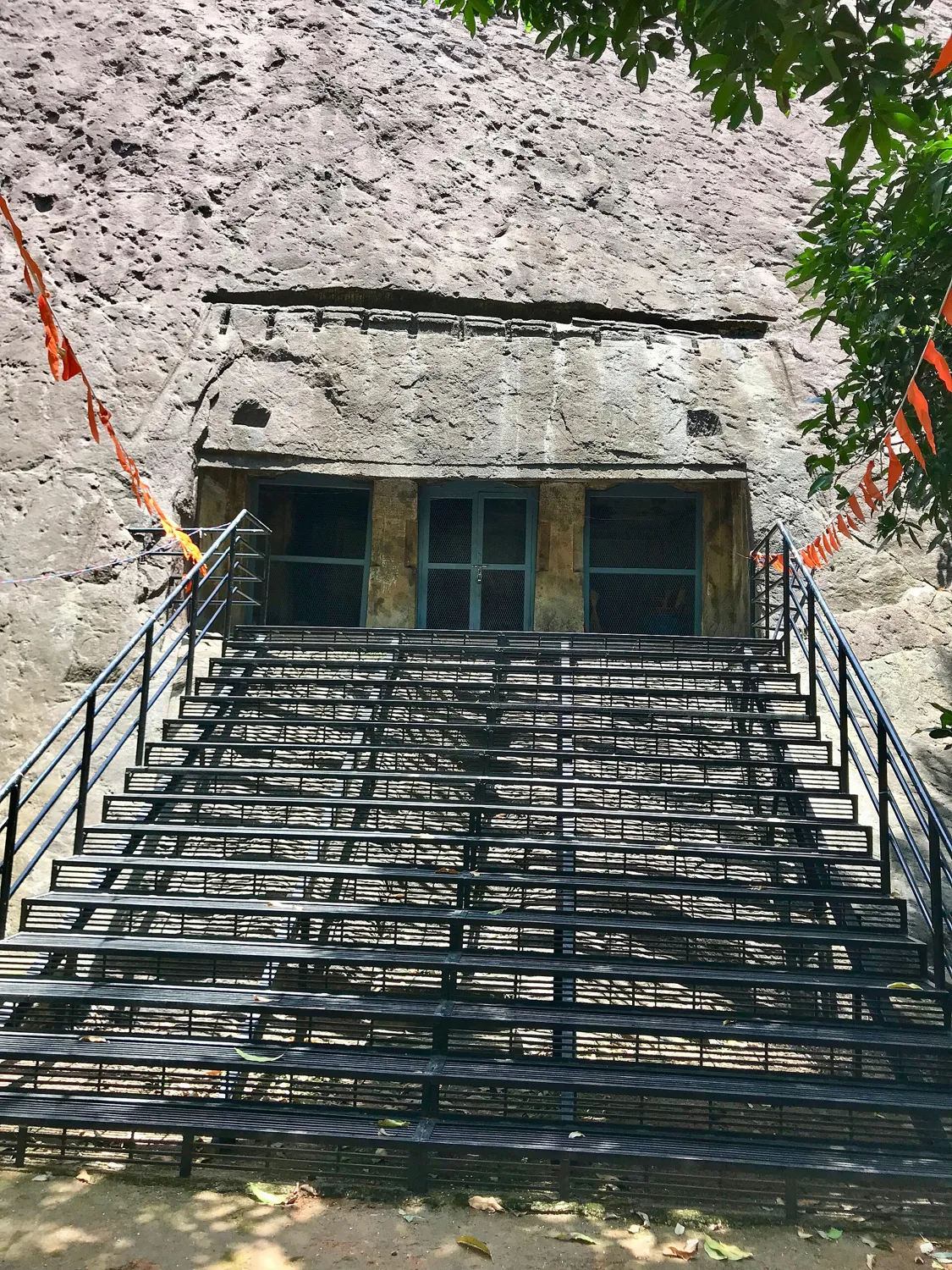
Entrance to the cave temple
Entrance to the cave temple · Photo: Ms Sarah Welch · CC BY-SA 4.0
02 / 02

The murals

You turn to the northern wall of the inner hall, where a coating of stucco holds the paintings that bring people here. They are faded and you have to look carefully. Figures and palace scenes emerge the longer you stand. One source considers these the earliest phase of Kerala mural art, which would make this patchy wall a starting point for a tradition you can see across the region.

Being here

You see

Rough-hewn walls and traces of old pigment in dim light.

You hear

Almost nothing once you are inside the rock.

You smell

Cool stone and old damp plaster.

You feel

The temperature dropping as you step in from the sun.

Look around

The story

This rock-cut shrine is dated by most sources to the 9th century, though Trawell says 8th. Epigraphic evidence suggests it was a Jain temple until about the 9th century, and during the time of Rajaraja Chola it appears to have passed into Hindu hands and become a Shiva shrine. Some sources credit the Ay ruler Vikramaditya Varaguna with its excavation. It is a protected monument under the ASI's Thrissur circle. Its surviving murals on the northern wall of the inner hall have been studied by scholars, including Ajit Kumar in a 2016 paper.

Sources: Wikipedia: Thirunadhikkara Cave Temple · Trawell: Kanyakumari places
Close by

Parthasarathy Temple, Parthivapuram
Photo: Ms Sarah Welch · CC0
Continue the journey

Parthasarathy Temple, Parthivapuram