Kanniyakumari
Padmanabhapuram Palace
Photo: Aviatorjk · CC BY-SA 3.0
Palace Country · Palace

Padmanabhapuram Palace

பத்மநாபபுரம் அரண்மனை

The wooden palace of the old Travancore capital

Move across the photo, or drag it on a phone, to look around.

You arrive

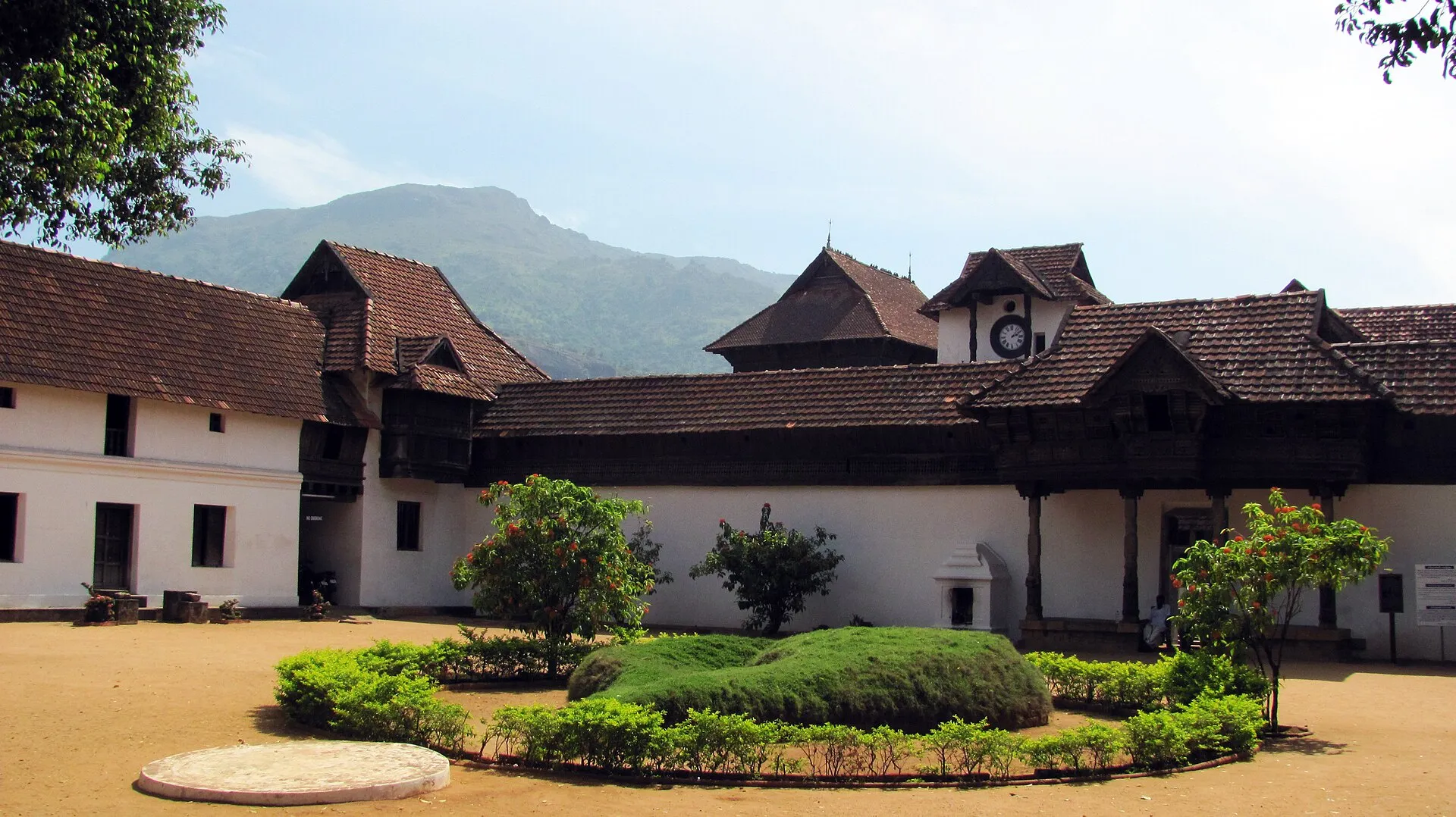
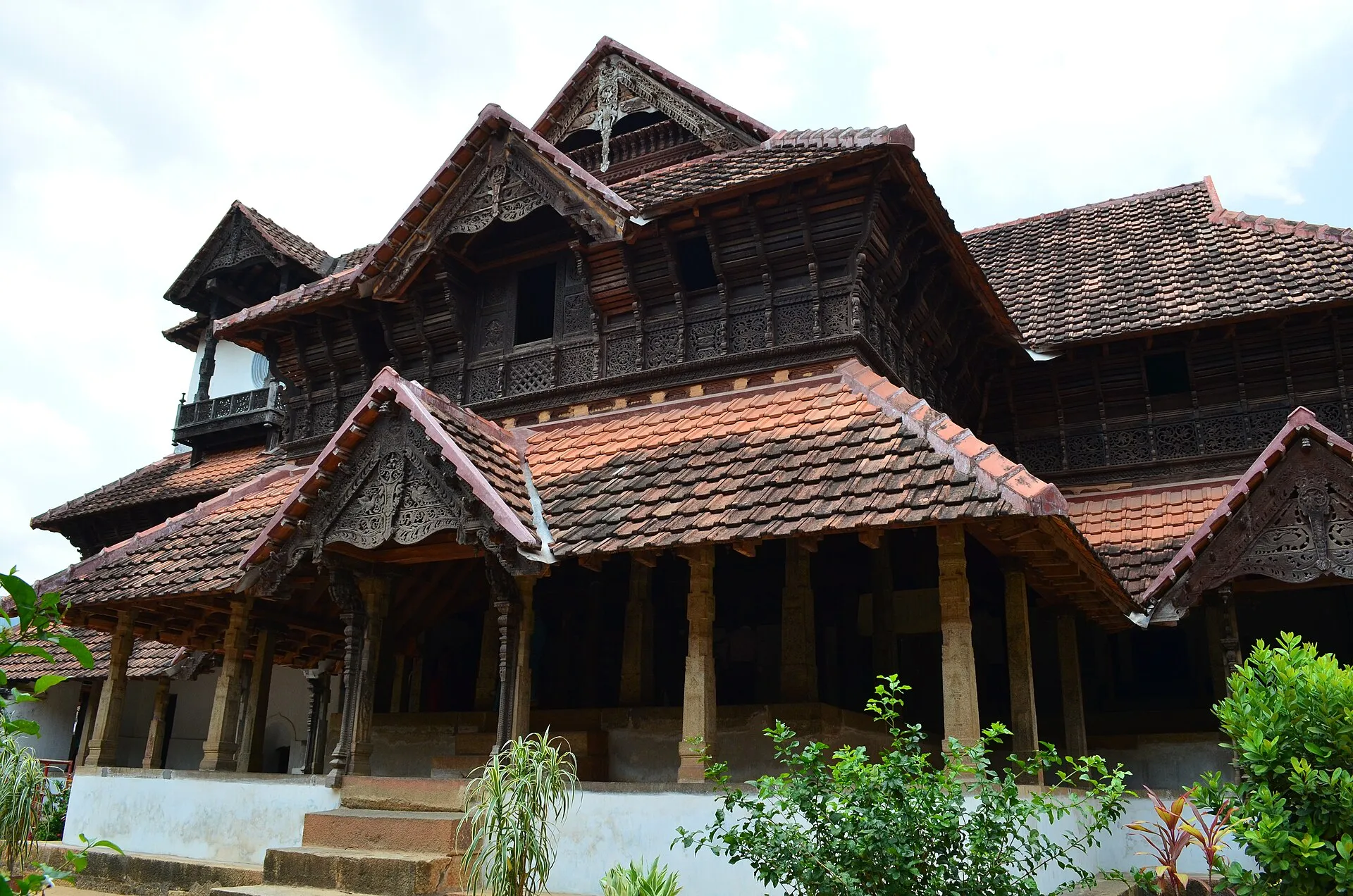
You come through the town of Padmanabhapuram with the Veli Hills rising behind it and old granite fort walls running beside the road. The fort encloses about 187 acres, and somewhere near its centre the palace waits on roughly seven of them. Sloping tiled roofs appear first, dark timber under them. The traffic falls away behind you. You buy your ticket, step up to the gateway, and the air changes from street heat to the shade of very old wood.

Padmanabhapuram Palace
Padmanabhapuram Palace · Photo: Rengeshb · CC BY-SA 3.0
01 / 04

The entrance and the clock tower

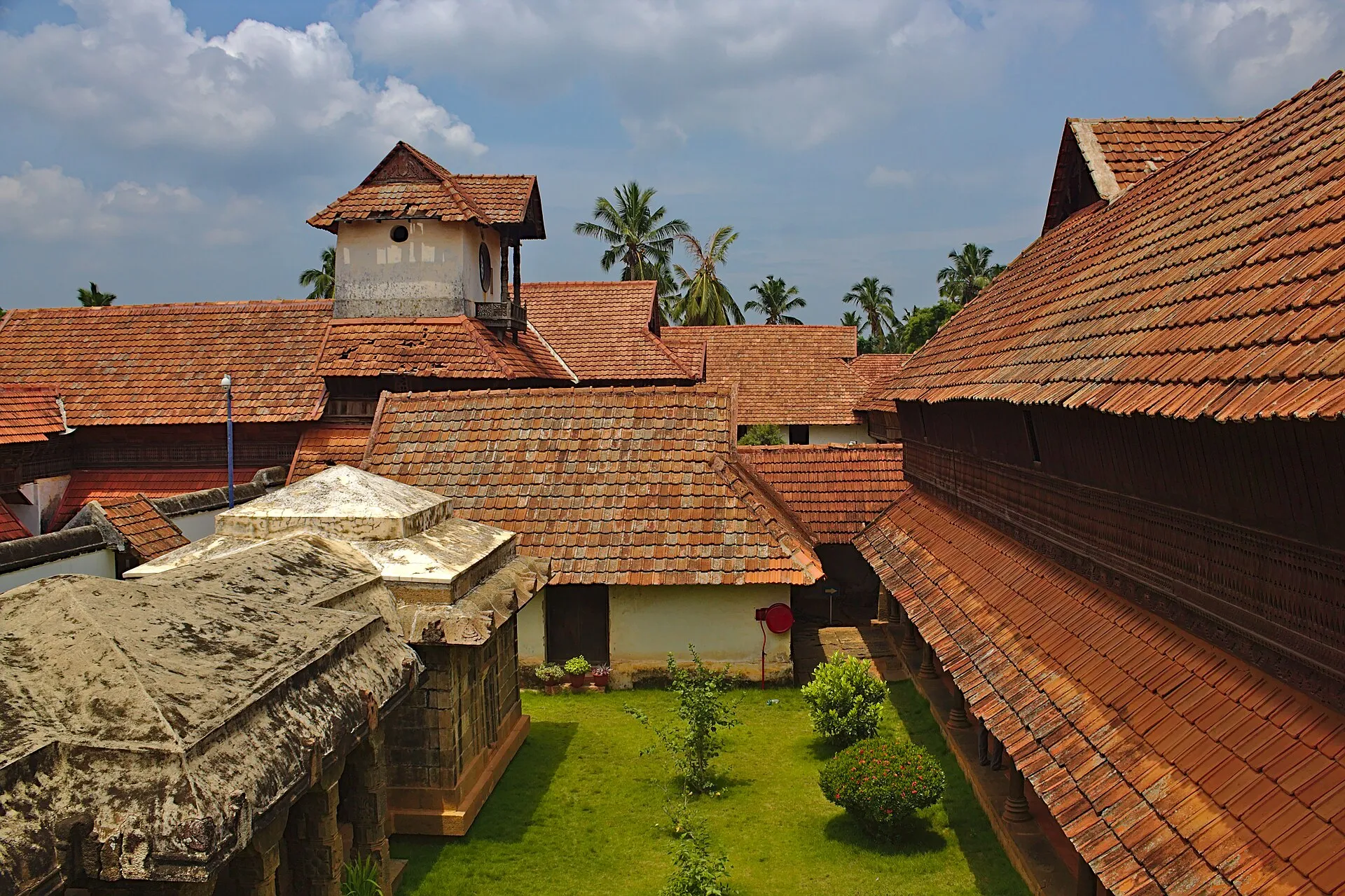
You begin at the entrance hall, the Poomukham side of the palace, where carved timber frames every view. Above you stands the clock tower, put up in 1832 and described by the district administration as one of the oldest in India and still working. Stand still for a moment and let your eyes adjust. After the glare of the courtyard, the interior is a world of brown shadow, and the rooms lead on from one another.

The palace clock tower from a distance
The palace clock tower from a distance · Photo: Shishirdasika · CC BY-SA 4.0
02 / 04

The council chamber upstairs

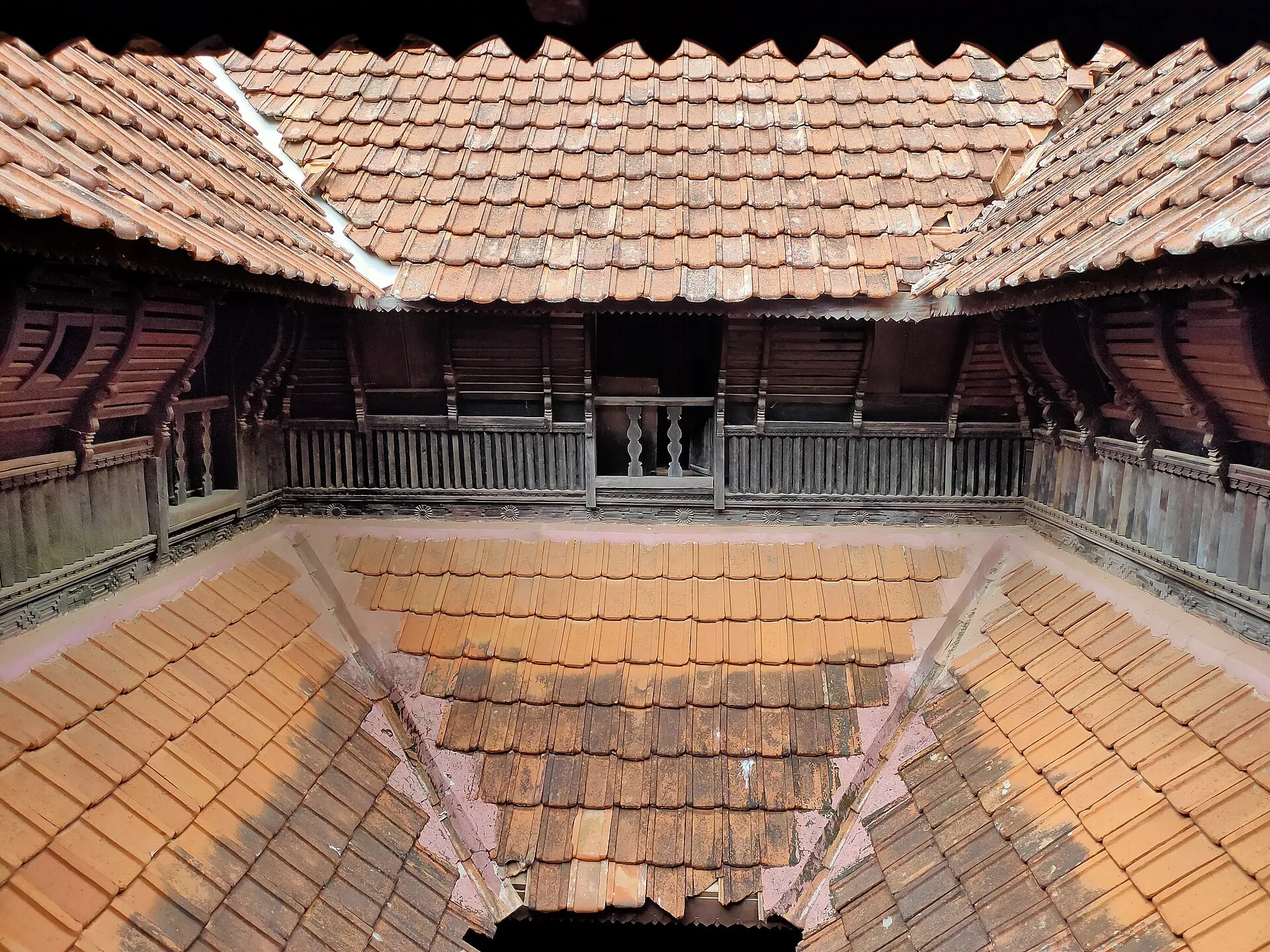
You climb to the Mantrasala, the first-floor council chamber where the ruler sat with ministers and prominent citizens. Look down. The floor is the thing people remember: polished with a mix of coconut shell ash, fermented eggs and lime, it reflects the light like a dark mirror. Latticed wooden screens filter the daylight into small patterns. Next door is the dancing hall, once reserved for the royal family.

Padmanabhapuram Palace
Padmanabhapuram Palace · Photo: Athulvis · CC BY-SA 4.0
03 / 04

The great dining hall

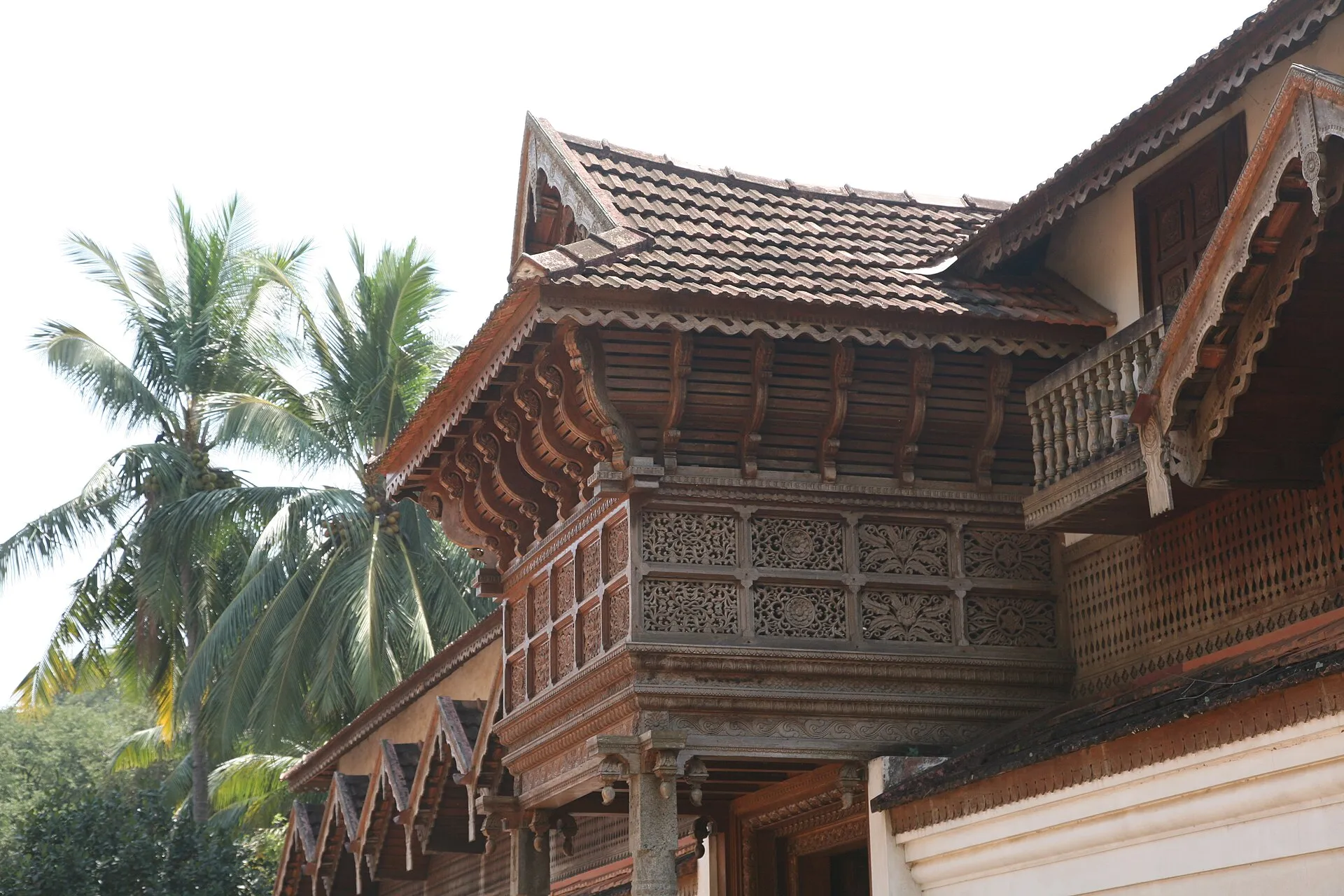
You walk on to the Uttupura, the two-storey dining hall, about 78 metres long and only 6 metres wide. The official account says around 2,000 people could sit here, and that daily meals for the poor were served in this room, which is why the king was called Dharmaraja. Walk its length slowly. The proportions make it feel less like a room and more like a covered street.

Padmanabhapuram Palace
Padmanabhapuram Palace · Photo: Hans A. Rosbach · CC BY-SA 3.0
04 / 04

Uppirika Malika and the Navarathri Mandapam

You reach Uppirika Malika, the three-storey building that rises above the rest. The first floor holds a cot made from 64 medicinal plants, given to Marthanda Varma by the Dutch East India Company in 1750, and the top floor keeps a wooden cot associated with Lord Vishnu. Your last stop changes the mood: the Navarathri Mandapam, a spacious hall of Nayak-style granite pillars built for music and Bharatanatyam before the royal family.

Being here

You see

Dark polished timber, latticed screens and thin blades of daylight crossing the floors.

You hear

Bare footsteps on old boards and low voices carried down long wooden rooms.

You smell

Aged wood and the cool, slightly dusty air of closed interior rooms.

You feel

The sudden coolness of shade after the courtyard, and a smooth floor underfoot.

Look around

The story

The palace was built around 1601 by Iravi Varma Kulasekhara Perumal, who ruled Venad from 1592 to 1609. Marthanda Varma, the founder of modern Travancore, rebuilt it around 1750 and dedicated his kingdom to Sree Padmanabha, a form of Vishnu, ruling as the god's servant, which gave the city its name. He also replaced the original mud fort with granite. In 1795 the capital moved to Thiruvananthapuram. When the district passed to Tamil Nadu in 1956 the palace stayed with Kerala, and it is still owned and maintained by the Kerala Government, an unusual arrangement you can see on the signboards.

Sources: Kanniyakumari district: Padmanabapuram Palace · Wikipedia: Padmanabhapuram Palace · Tamil Nadu Tourism: Padmanabhapuram Palace
Close by

Udayagiri Fort
Photo: Infocaster at English Wikipedia · CC BY-SA 3.0
Continue the journey

Udayagiri Fort