Kanniyakumari
Vivekananda Rock Memorial
Photo: Babipal197414 · CC BY-SA 3.0
The Cape · Monument

Vivekananda Rock Memorial

விவேகானந்தர் பாறை நினைவகம்

A memorial on bare rock, with the sea on every side.

Move across the photo, or drag it on a phone, to look around.

You arrive

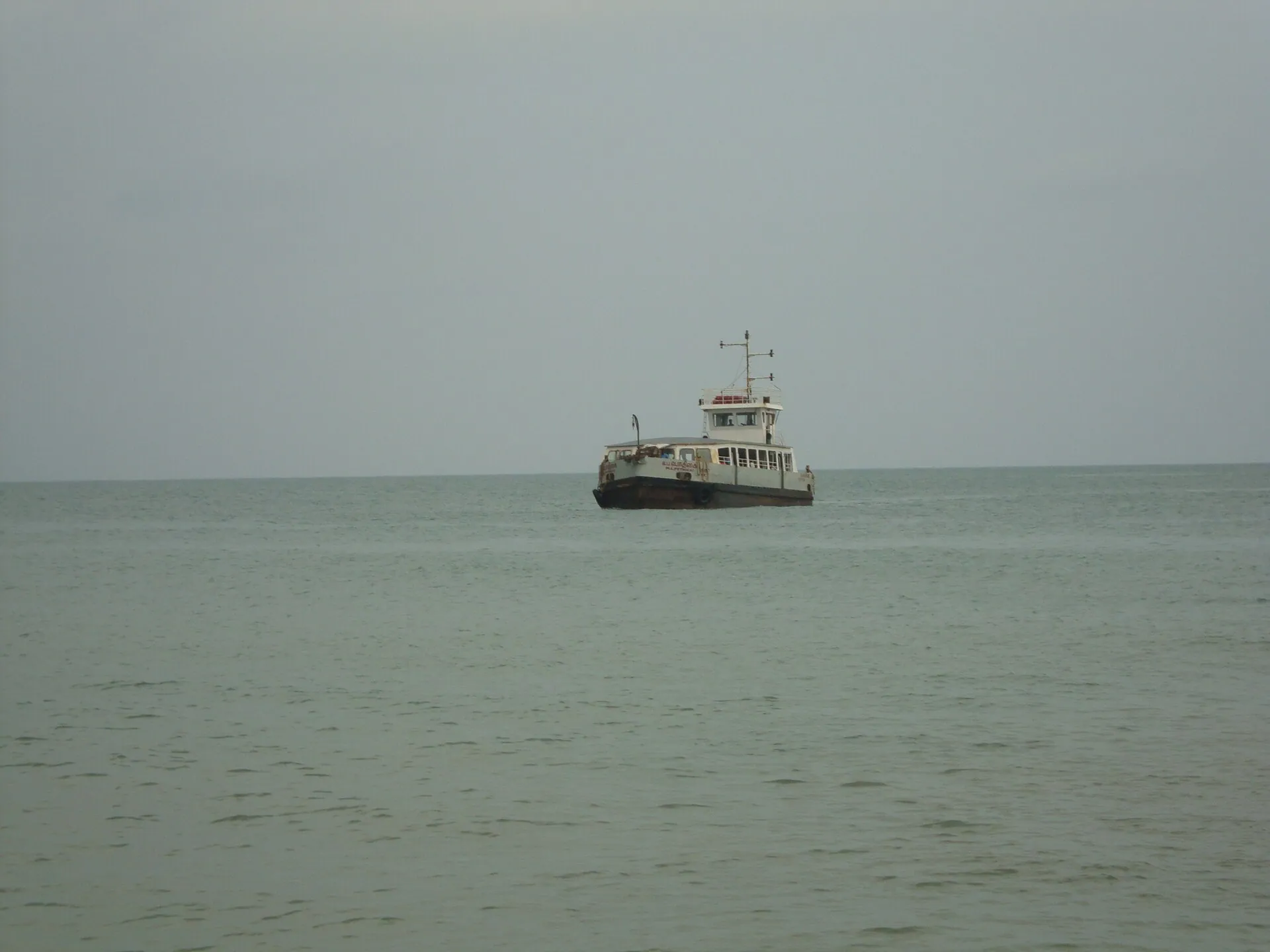
The boat slows and the rock rises out of the water ahead of you, darker than you expected, with the memorial sitting square on top of it. Spray drifts over the rail. You step from the moving deck onto stone that does not move at all, and the sound of the engine gives way to wind and surf. Behind you the mainland has become a thin line of buildings. In front of you, broad steps climb toward the mandapam.

Vivekananda Rock Memorial
Vivekananda Rock Memorial · Photo: Akshatha · CC BY-SA 3.0
01 / 04

Up the entrance steps

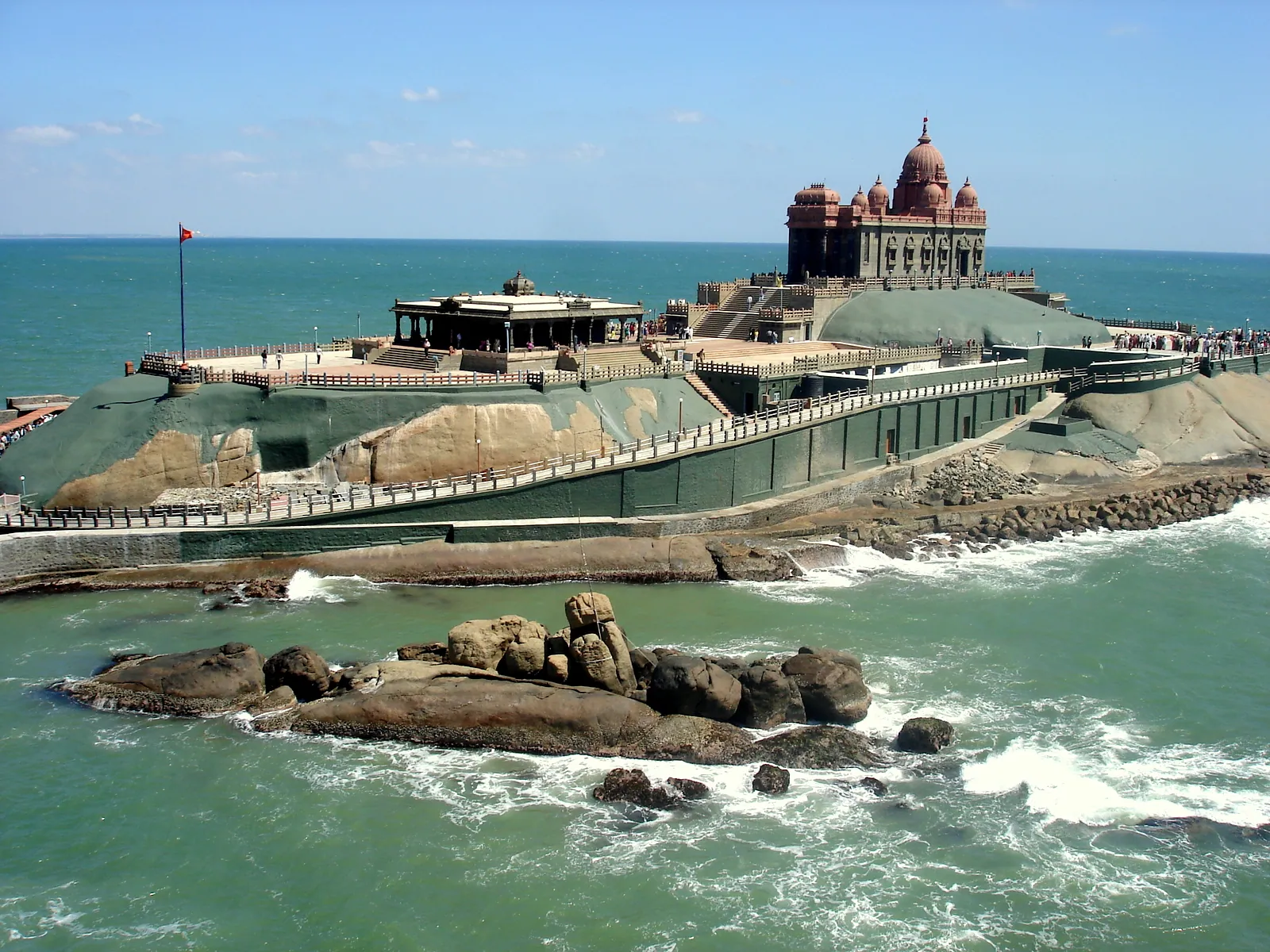
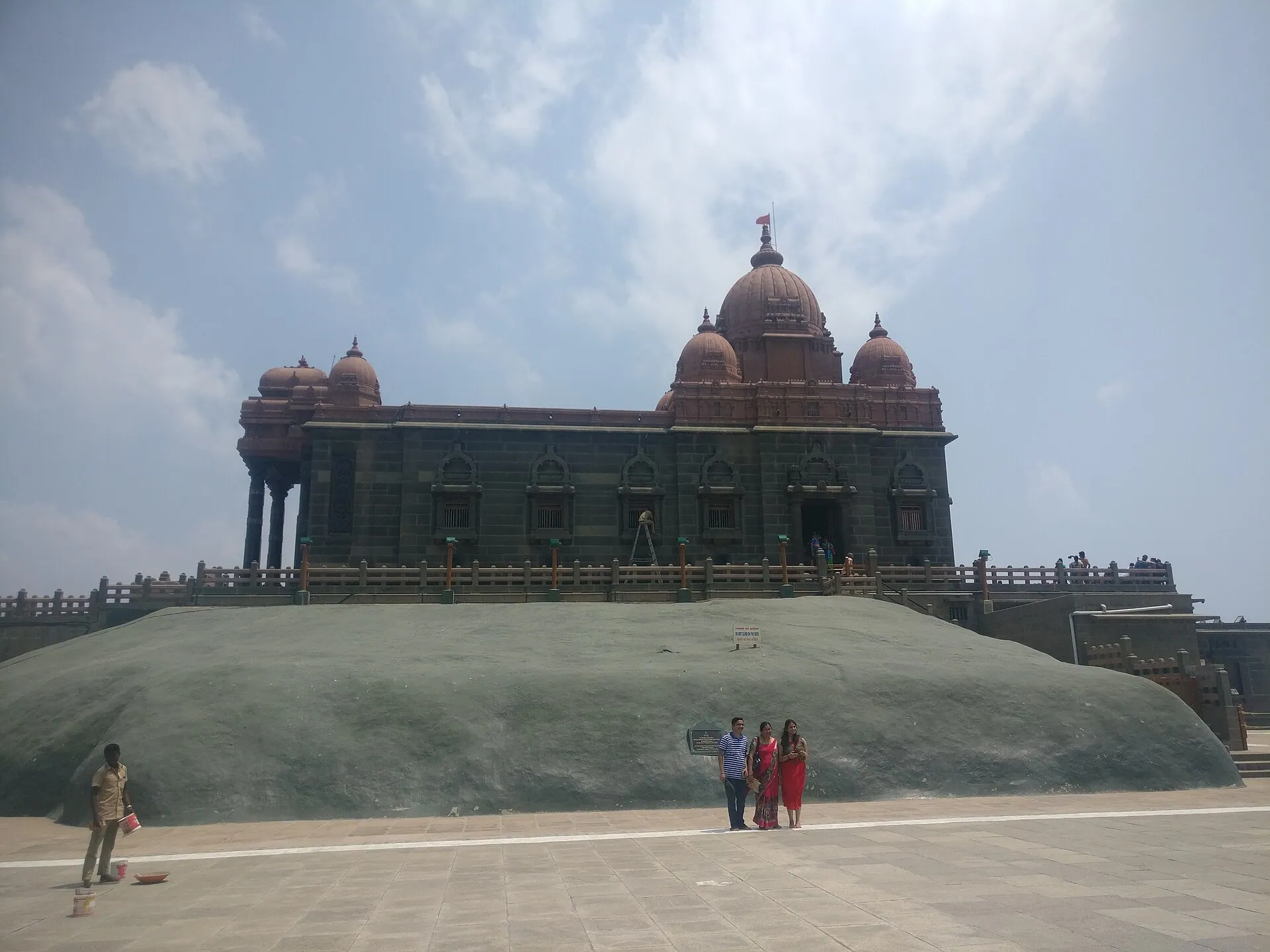
You climb the front steps slowly, in the slow tide of other visitors, and the sea opens out further with each one. The Vivekananda Mandapam stretches ahead of you, about 180 feet long and 56 feet wide according to the district's figures. Its design draws on temple architecture from across India, so the shapes feel familiar and yet not tied to any one region. Stone is warm under your hand where the sun has reached it.

Vivekananda Rock Memorial
Vivekananda Rock Memorial · Photo: Mujeebcpy · CC BY-SA 4.0
02 / 04

The statue in the Sabha Mandapam

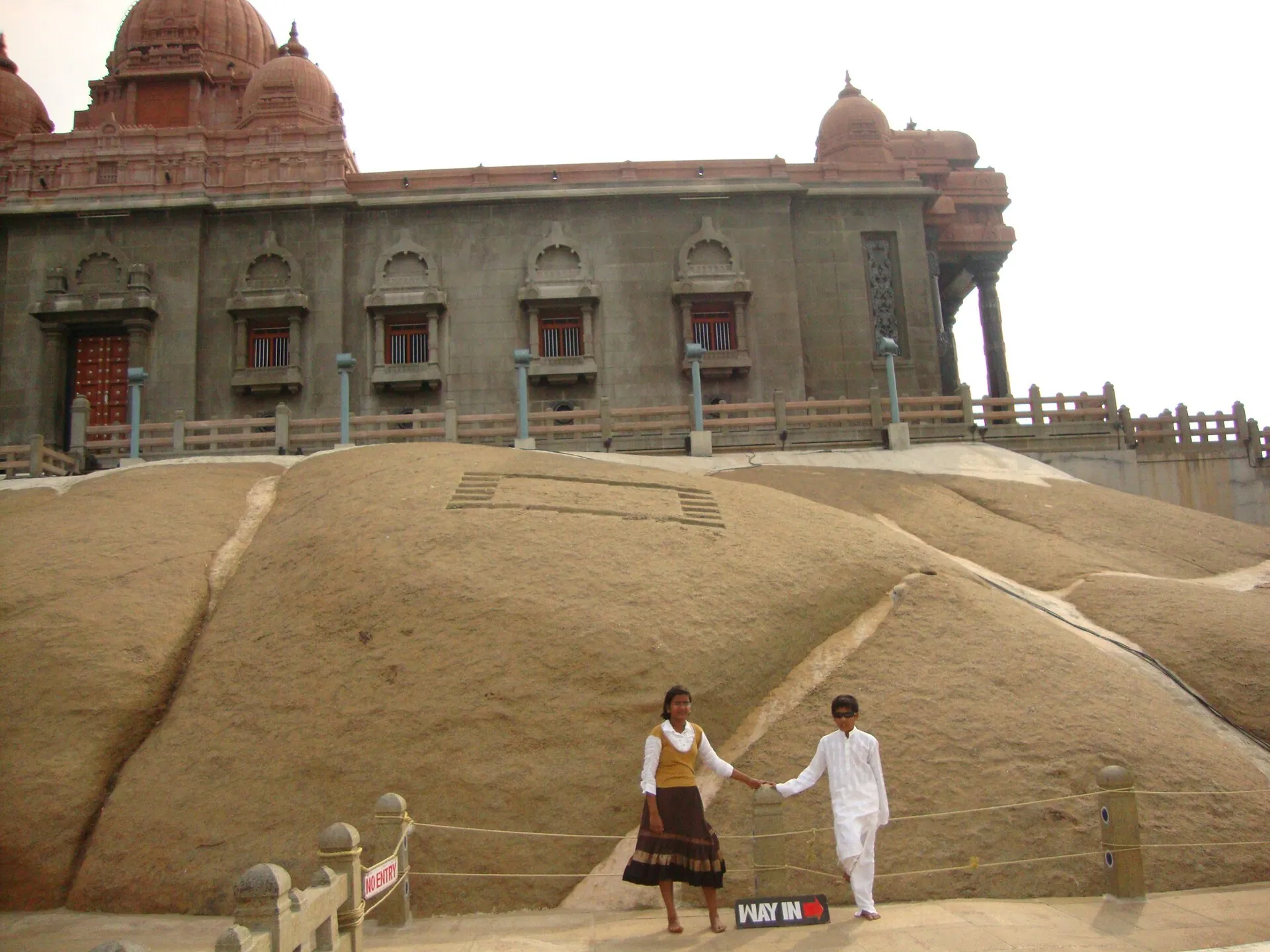
Inside the assembly hall the light drops and the wind falls away. The statue of Swami Vivekananda stands in its own section, and you notice which way it looks. Both mandapams on this rock were aligned so that the statue faces directly toward the Shripadam, the sacred mark in the second shrine. You turn to follow that line of sight, and the plan of the whole island suddenly makes sense to you.

The memorial from outside
The memorial from outside · Photo: Akshatha · CC BY-SA 3.0
03 / 04

Silence in the Dhyana Mandapam

Attached to the memorial is the Dhyana Mandapam, the meditation hall, set apart for sitting in silence. You leave your hurry at the door. Voices stop here, and the sea becomes something you sense more than hear, a low pressure at the edge of the quiet. Stay for a few minutes even if you do not meditate. After the boat and the queues, the stillness comes as a physical relief.

Vivekananda Rock Memorial
Vivekananda Rock Memorial · Photo: gayathri g a · CC BY-SA 4.0
04 / 04

The Shripada Mandapam and the outer platform

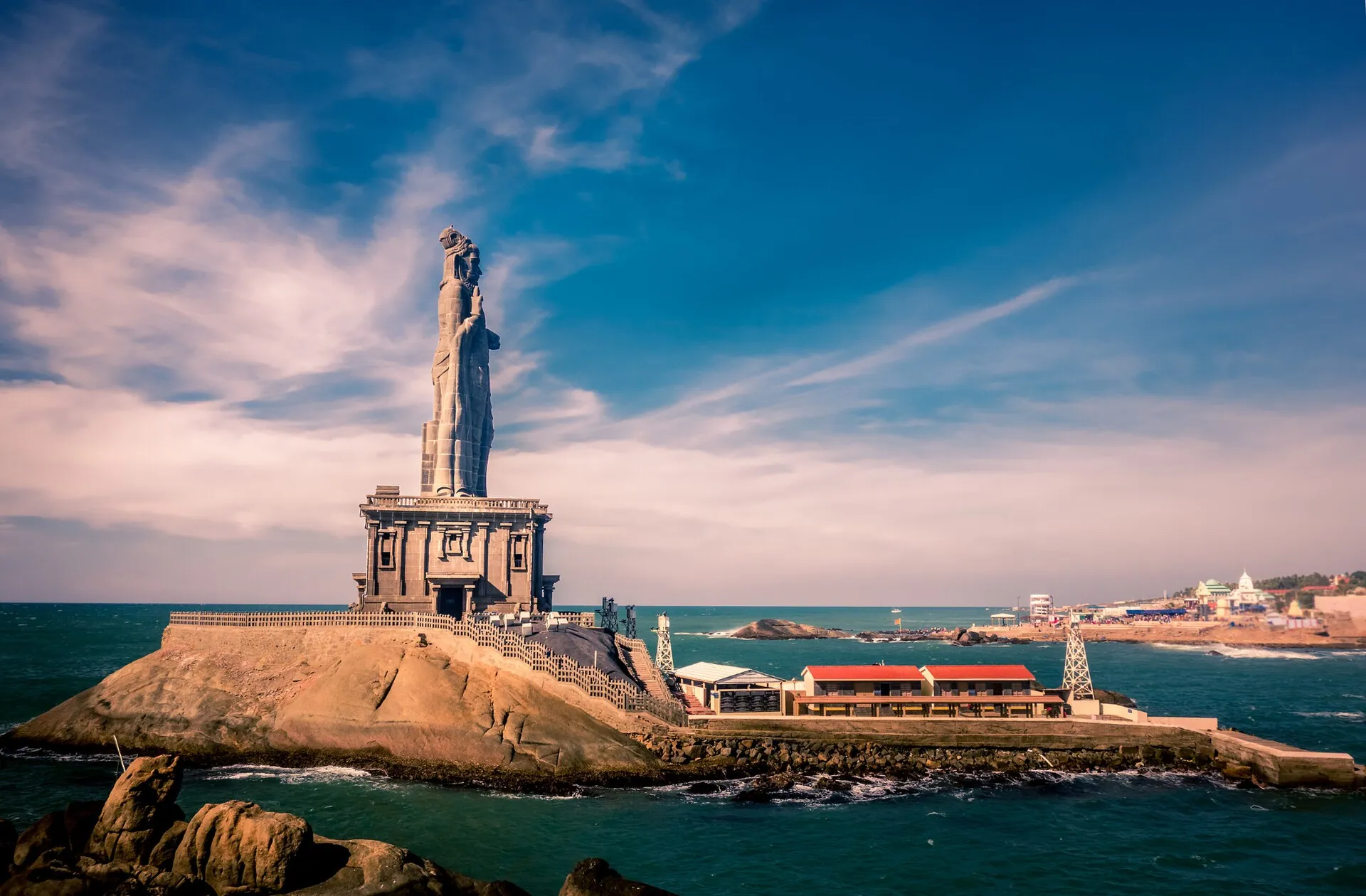
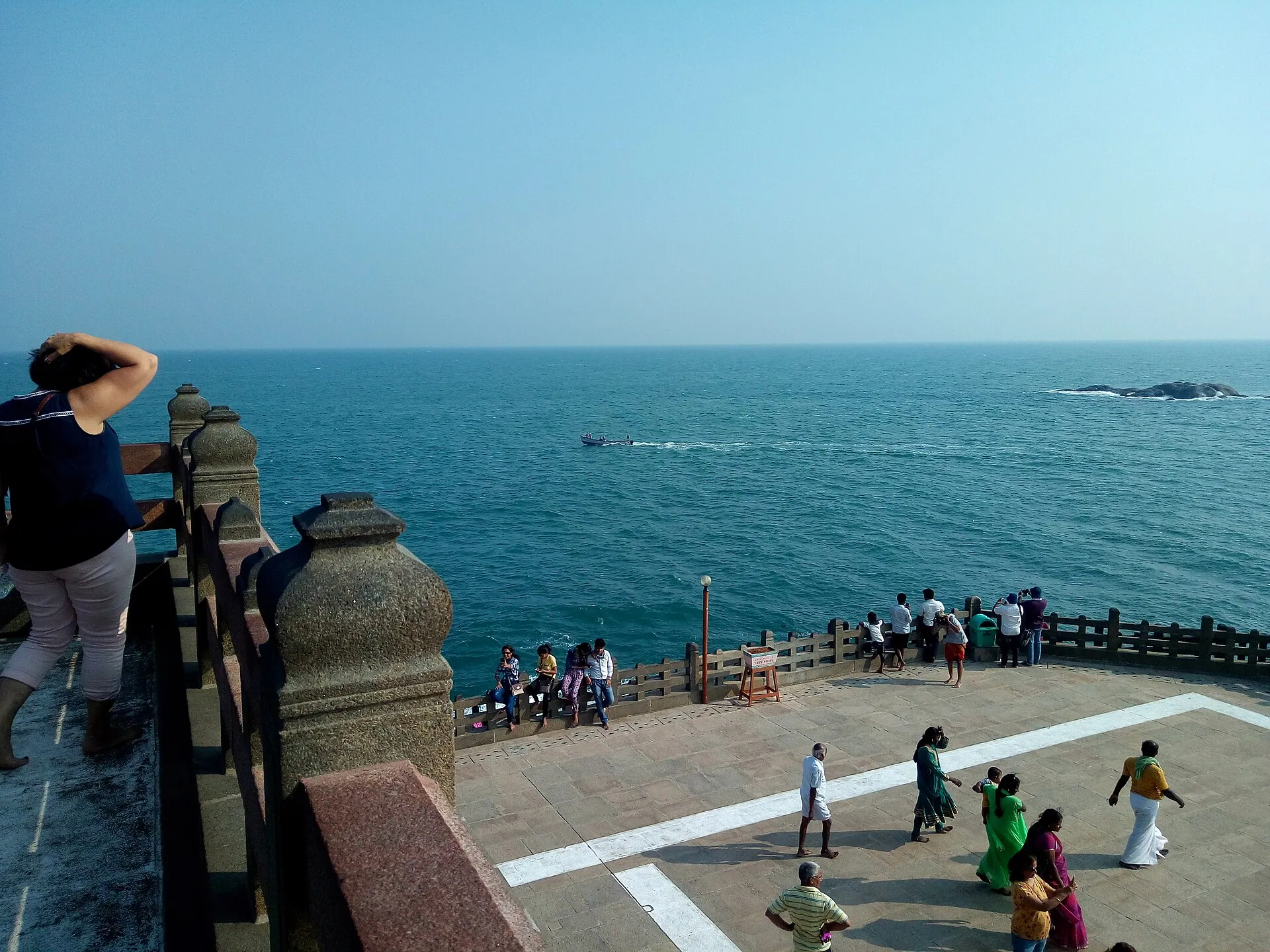
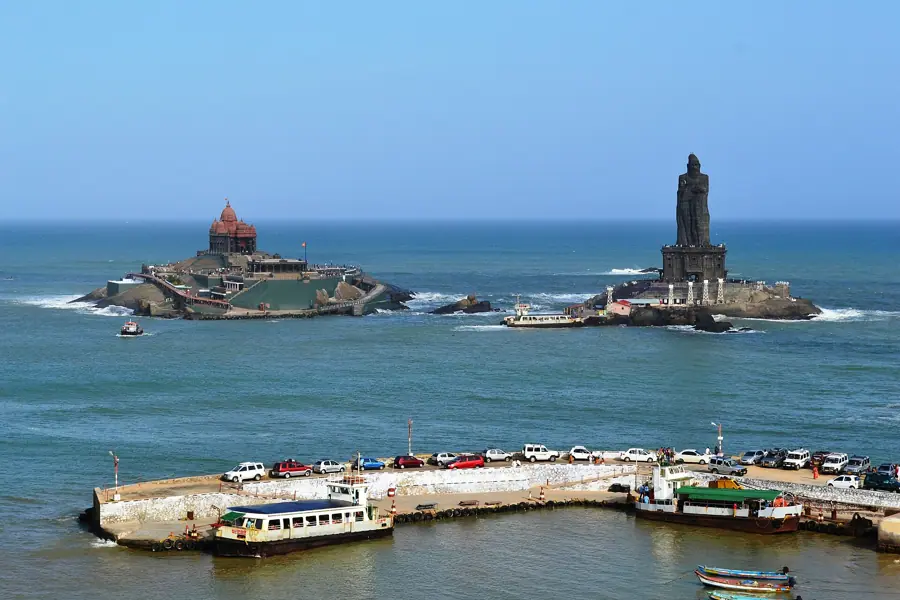
You cross to the square Shripada Mandapam, walk its inner and outer corridors, and stop before the projection in the rock revered as the footprint of the goddess. Then you step out to the platform. The Thiruvalluvar Statue stands close by on its own rock, and the glass bridge runs between you and it. Wind pushes at your clothes. Water moves on all sides, and there is nothing further south but ocean.

Being here

You see

Dark rock, pale stonework and open water in every direction, with the Thiruvalluvar Statue close enough to study.

You hear

Wind and surf outside, and an abrupt hush the moment you enter the meditation hall.

You smell

Salt air and sun-warmed stone.

You feel

The sway of the boat, then solid rock, then a steady sea wind on your face.

Look around

The story

The memorial marks the place where Swami Vivekananda is said to have meditated from 24 to 26 December 1892, after which, as many accounts tell it, he reached the resolve that shaped his later work. It was built in 1970 by the Vivekananda Rock Memorial Committee. Tradition holds that this rock, Shripada Parai, is where Goddess Kanyakumari performed penance in devotion to Shiva, and a projection in the stone is revered as her footprint. The site therefore carries two layers of meaning at once. The Vivekananda Mandapam honours a modern teacher, while the Shripada Mandapam shelters a much older sacred mark, and the architects tied them together by turning the statue to face the footprint.

Sources: Kanniyakumari district: Vivekananda Mandapam · Wikipedia: Vivekananda Rock Memorial · Wikivoyage: Kanyakumari · Tamil Nadu Tourism: Kanniyakumari
Close by

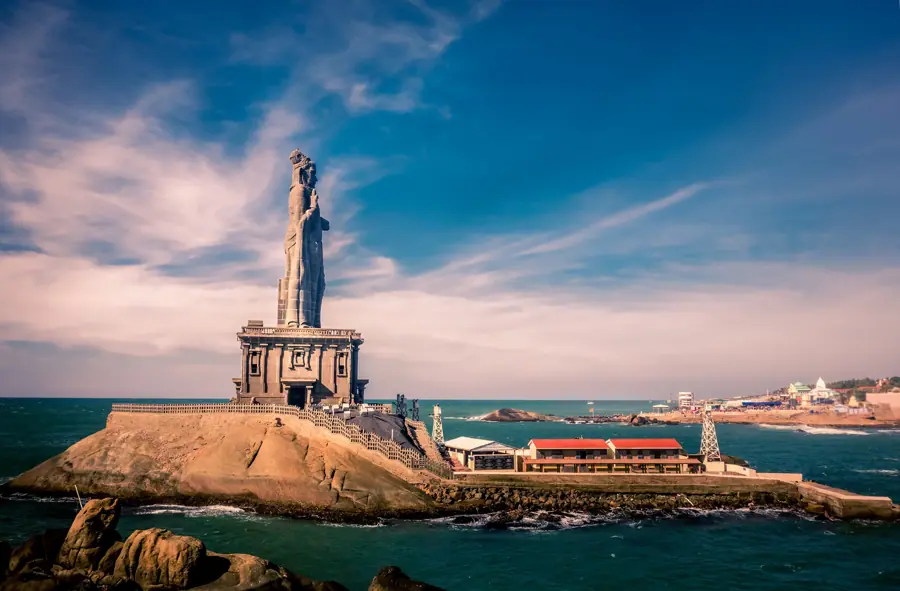
Thiruvalluvar Statue
Photo: Kv Gopalakrishnan · CC BY 3.0
Continue the journey

Thiruvalluvar Statue