Kanniyakumari
Vattakottai Fort
Photo: Rohith1729 · CC BY-SA 3.0
East Coast · Fort

Vattakottai Fort

வட்டக்கோட்டை

A round granite fort with its feet almost in the sea

Move across the photo, or drag it on a phone, to look around.

You arrive

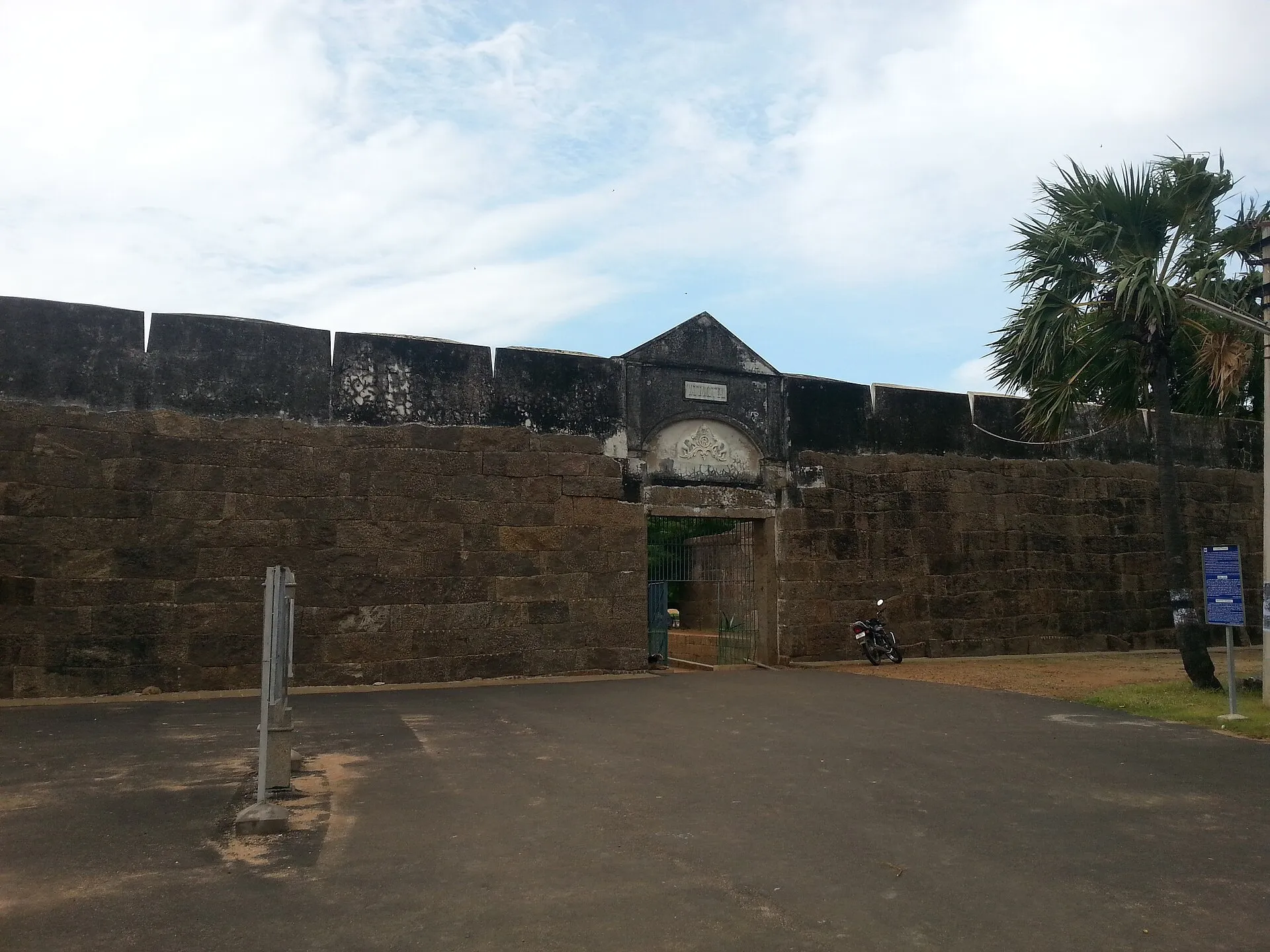
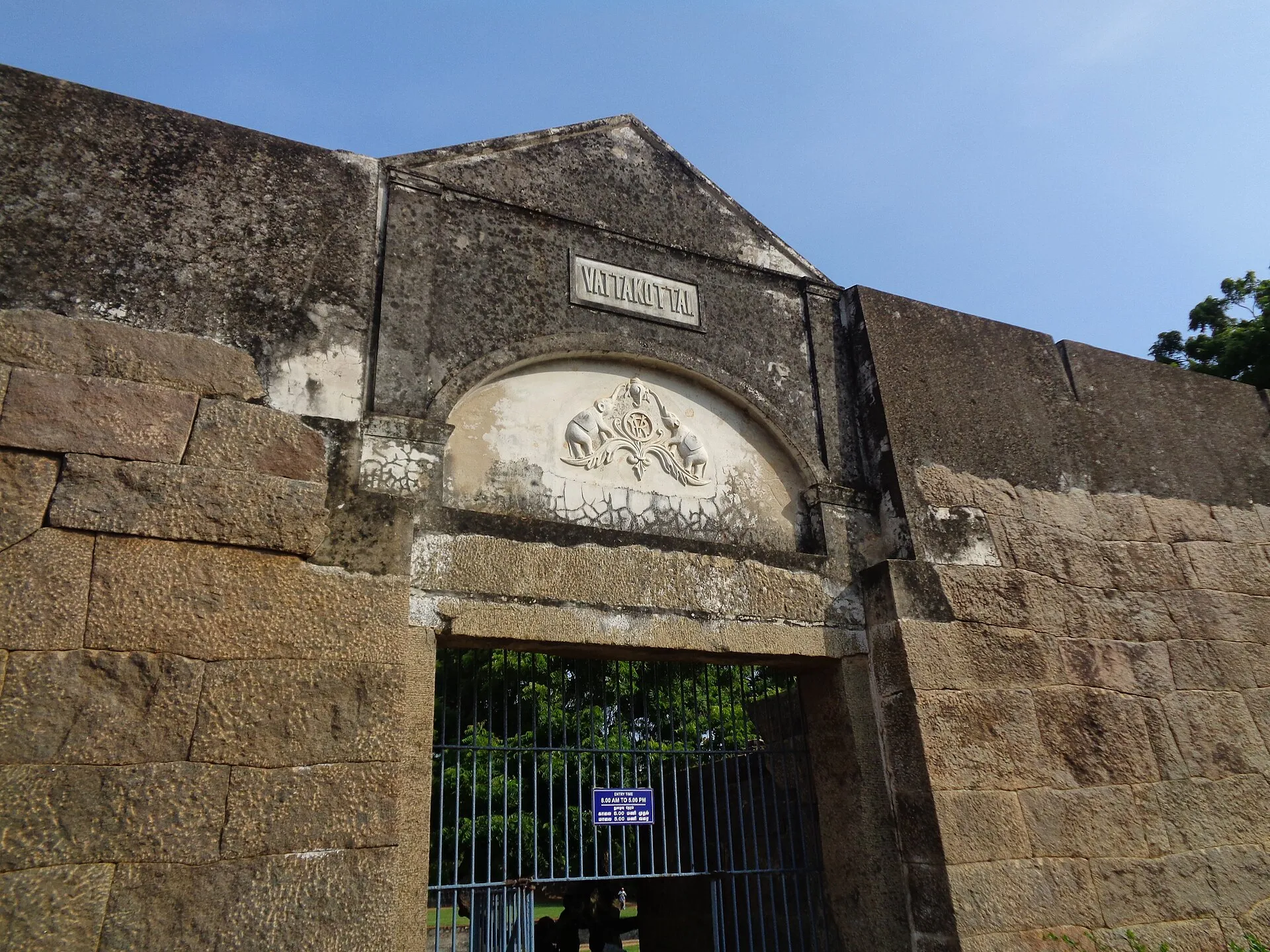
The road runs north from the Cape with the sea close on your right, and then the wall appears: low, grey, curving out of sight in both directions. Nothing about it is built to impress from a distance. You leave the vehicle, cross toward the gateway, and the wind reaches you before the shade of the stone does. Vattakottai means circular fort, and you can already feel the shape of the place bending around you.

Vattakottai Fort
Vattakottai Fort · Photo: Prabhup25 · CC BY-SA 4.0
01 / 04

Through the gateway

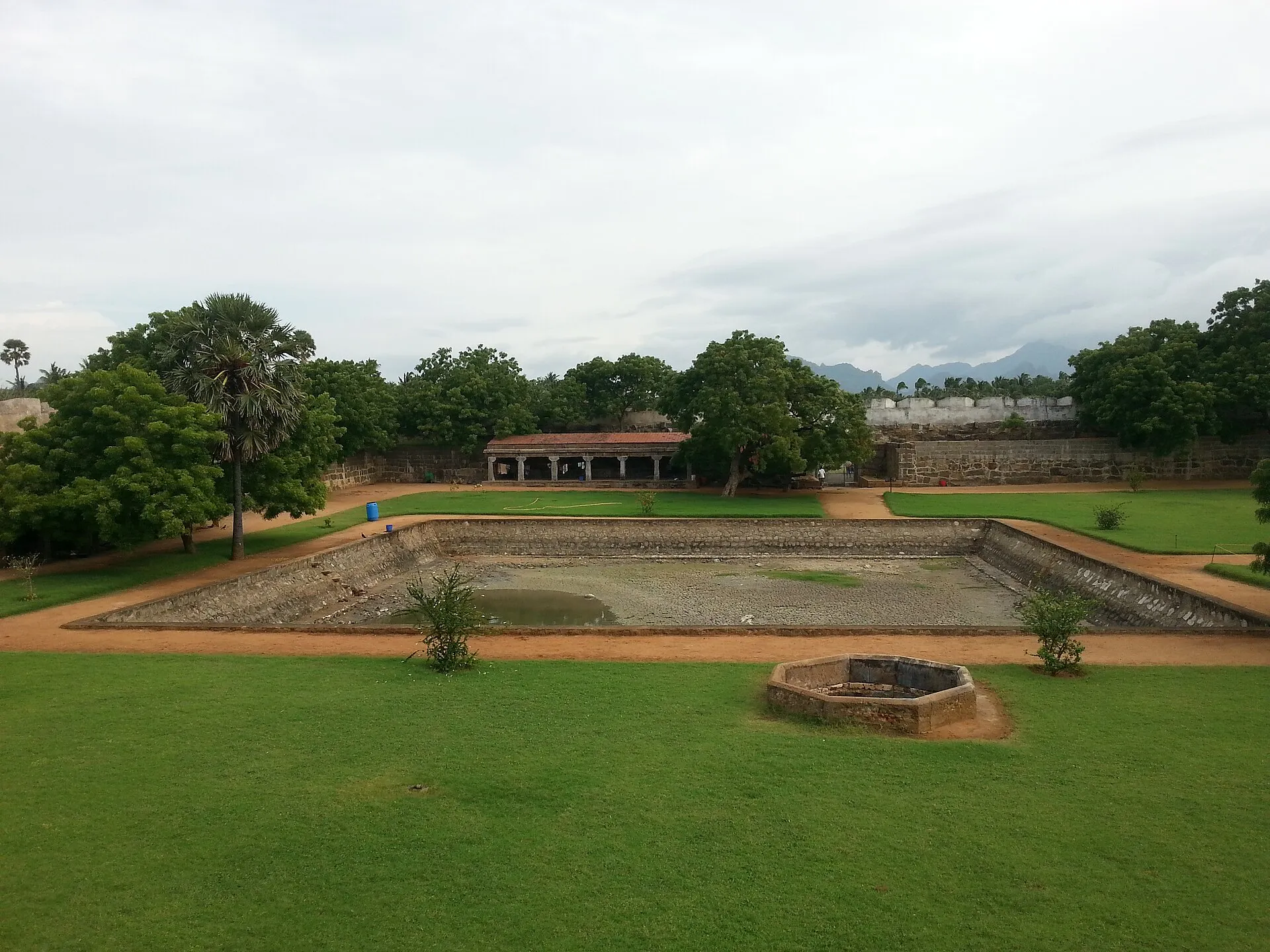
You pass through the thickness of the wall and the noise of the road drops away. Inside, the fort opens into a broad enclosure with a small garden, more a clearing than a courtyard. The granite is rough under your palm and warm wherever the sun has reached it. This was a working coastal post and barracks, so look for plainness rather than ornament, and let your eyes adjust to the glare.

Vattakottai Fort
Vattakottai Fort · Photo: Rohith1729 · CC BY-SA 3.0
02 / 04

Up to the ramparts

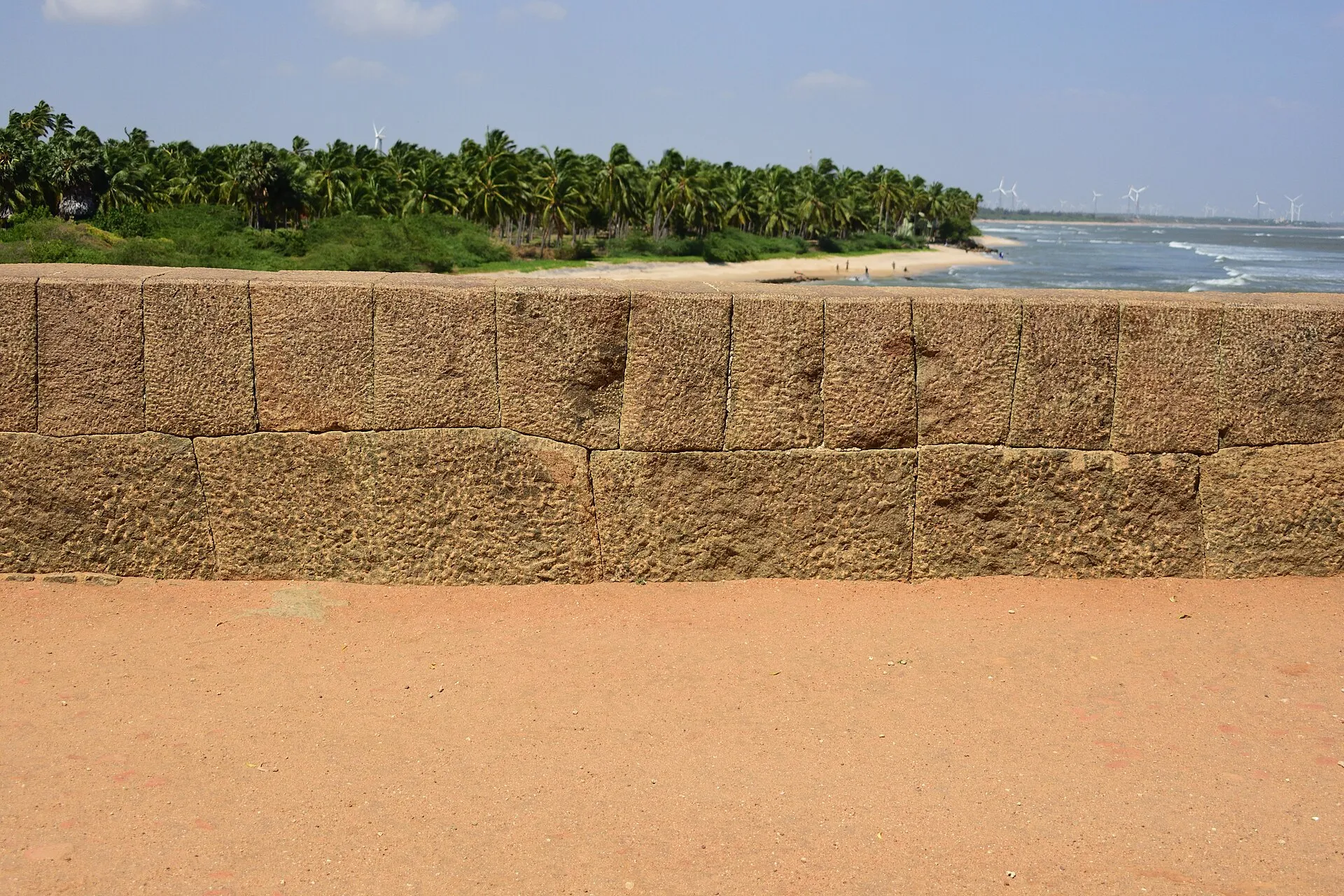
Climb to the top of the wall and the whole purpose of the fort makes sense at once. The sea fills everything on one side, and the shoreline runs away north and south with nothing to interrupt a lookout. Walk slowly along the curve. Soldiers once watched this water for approaching ships, and you are standing where they stood, with the same wind pushing at your shirt.

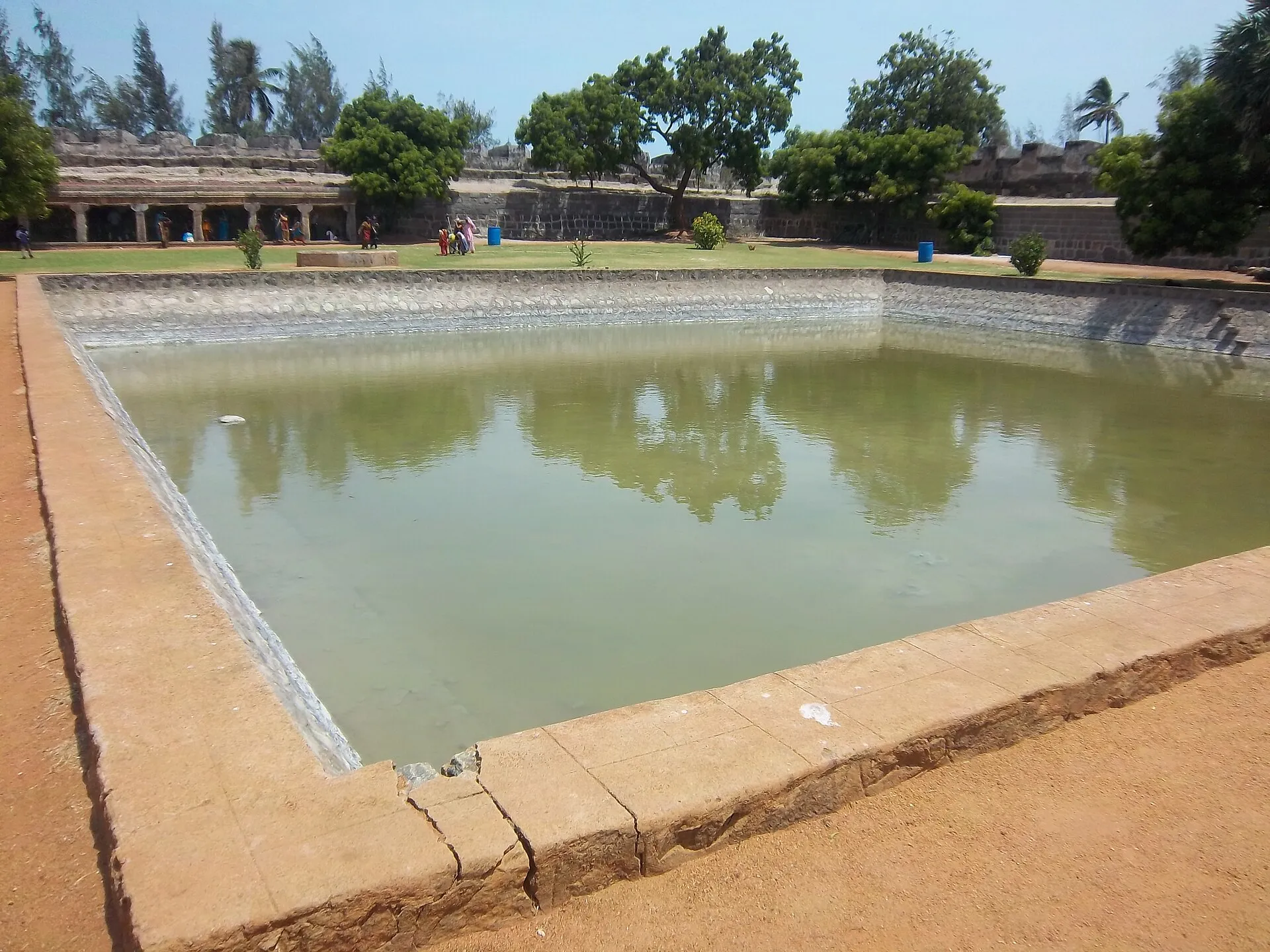
Tank inside the fort
Tank inside the fort · Photo: Devasyapratimah · CC BY-SA 3.0
03 / 04

Following the curve

Keep walking and the view turns with you, from open water to the low green land behind the coast, where the southern hills rise in the distance on a clear day. The circular plan means there is no corner to arrive at; the wall simply keeps offering a new angle. Stop wherever the breeze is strongest. Most visitors need only half an hour here, but nothing stops you from sitting longer.

Vattakottai Fort
Vattakottai Fort · Photo: Drsjohn · CC BY-SA 4.0
04 / 04

Down to the shore

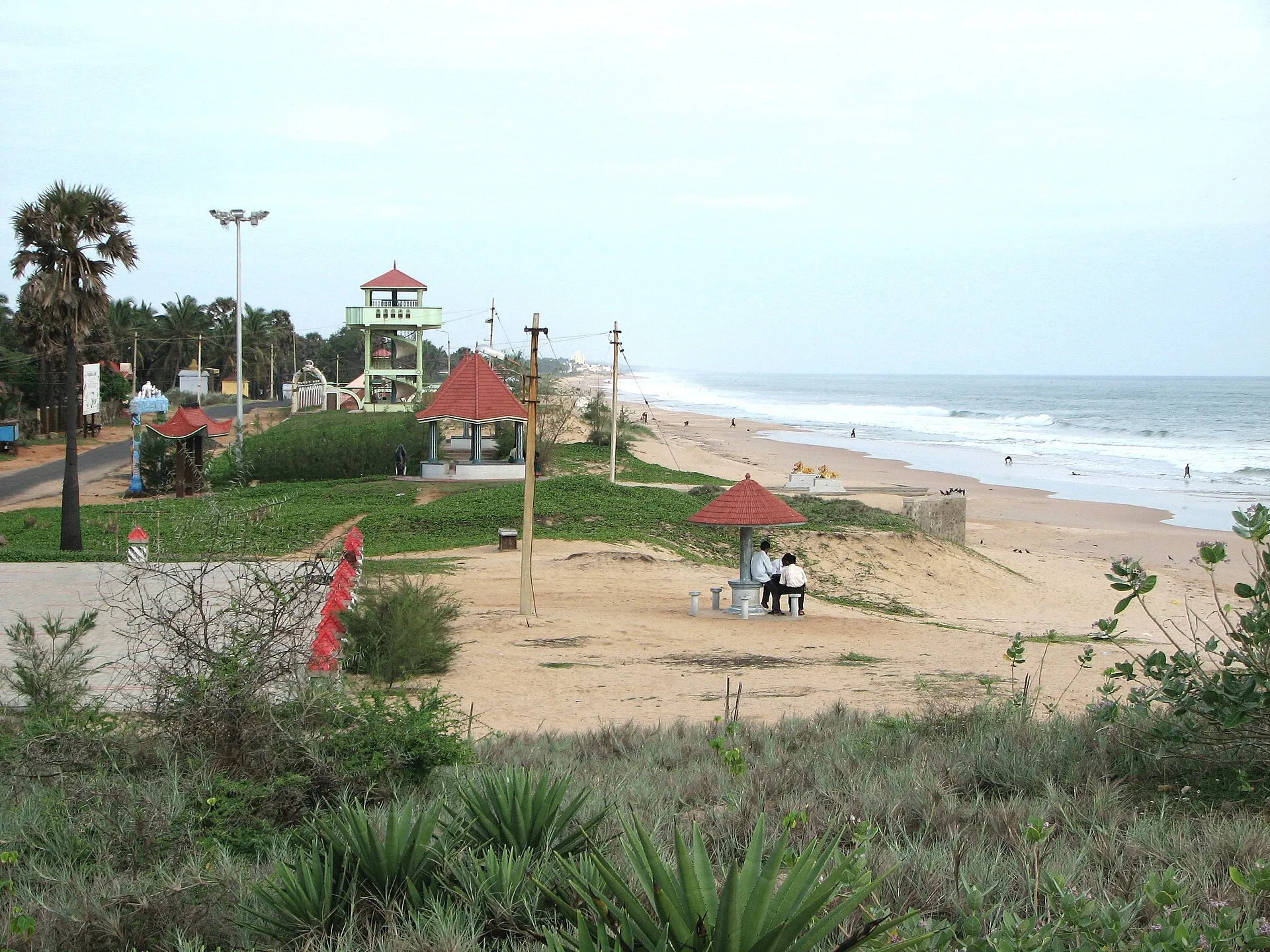
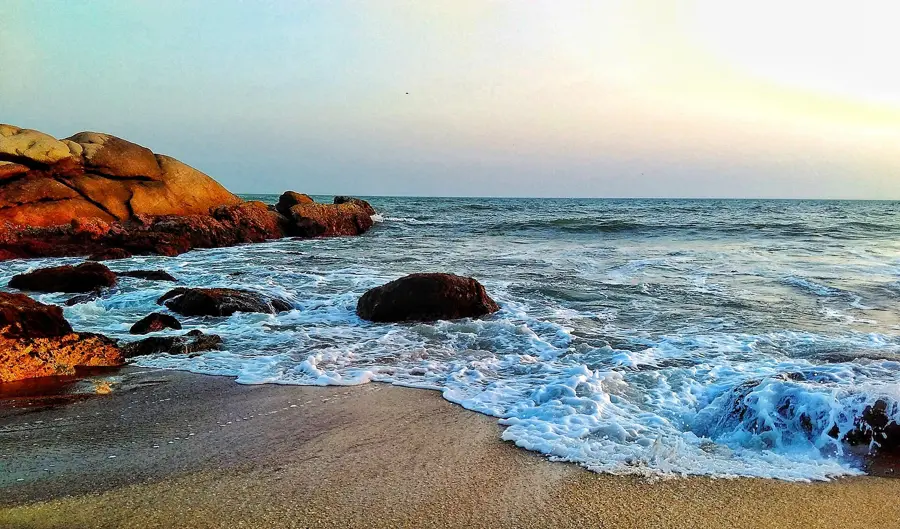
Come back through the gate and walk down toward the beach beside the fort. The stone that looked so heavy from above now stands low against the sky, with the water working at the shore in front of it. Tamil Nadu Tourism describes this as a quiet beach, and early or late in the day it usually is. Take off your shoes if the sand is cool, and look back at the wall one last time.

Being here

You see

Grey granite curving against a very blue horizon.

You hear

Wind across the top of the wall and waves breaking below it.

You smell

Salt air and sun-warmed stone.

You feel

Rough granite under your hand and a steady push of sea breeze.

Look around

The story

Vattakottai was built in the 18th century as a coastal defence and barracks for the kingdom of Travancore. Wikipedia credits its construction to Marthandan Chempakaraman Pillai, working for the Travancore kings, and records that it was later modified under Eustachius De Lannoy, a Dutch East India Company officer who was defeated by Travancore at the Battle of Colachel in 1741 and then rose to command the very army that beat him. It is described as the last in a string of coastal forts built by Travancore. Wikivoyage instead calls it a 16th-century Portuguese work, a claim the fuller histories do not support, so treat that date with caution.

Sources: Wikipedia: Vattakottai Fort · Wikivoyage: Kanyakumari · Trawell: places to visit · Tamil Nadu Tourism
Close by

Sothavilai Beach
Photo: Infocaster at English Wikipedia · CC BY-SA 3.0
Continue the journey

Sothavilai Beach